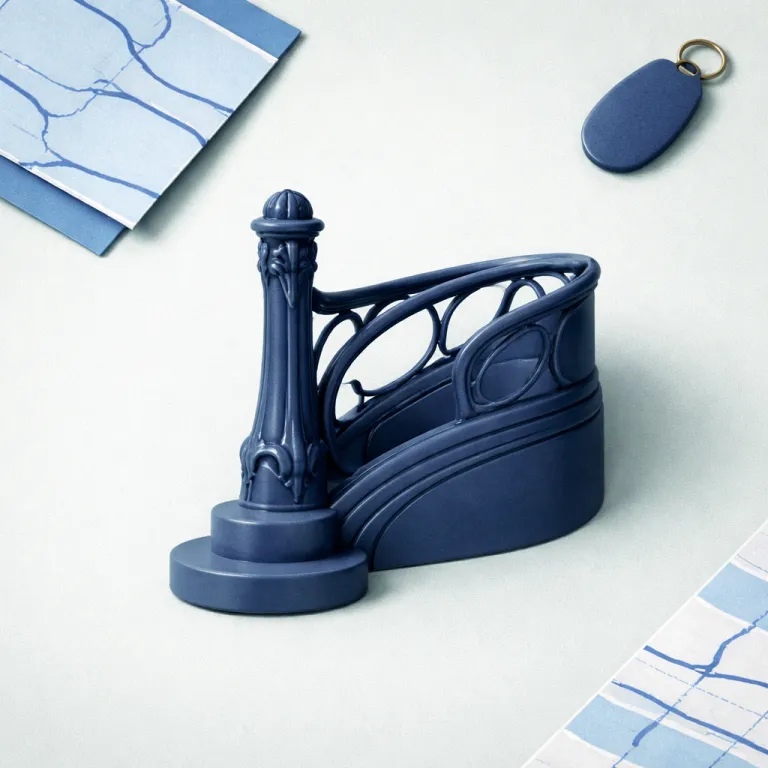
Victor Horta Brussels Walking Tour Art Nouveau: Staircases, Hotels, and Hidden Interiors
Why a Victor Horta Brussels walking tour Art Nouveau starts with staircases
Every serious Horta-focused Art Nouveau walking tour in Brussels should begin with a staircase, not a façade. In the Belgian capital, the most rewarding way to engage with Art Nouveau is to follow how each stairwell was designed to pull light, curve, and daily life into a single vertical gesture. For hotel guests staying near Grand Place or in uptown Sablon, this means planning a first tour around interiors you can actually enter, not just the famous building that was built for photographs.
Victor Horta was, as one expert summary puts it, “a Belgian architect and key figure in Art Nouveau.” When you visit Brussels with architecture in mind, you quickly see how this architect used the stair as a kind of private stage, where iron, glass, and carved wood choreograph the movement between floors. A focused Art Nouveau itinerary lets you read each house as a lived sculpture rather than a static museum piece, which is exactly what elevates a short city break into a deeper cultural stay.
Think of your own Horta walking route through the city as a sequence of stair encounters, from public museum halls to quiet hotel landings. The best luxury properties in Brussels understand this and often highlight their own staircases as part of the guest experience, especially those housed in a historic Art Nouveau or early Art Deco building. When you book a premium room, you are not only paying for space and service; you are also buying repeated, almost free access to a particular vertical landscape every time you go up to your floor, whether you choose the stairs or the lift.
The Sablon to centre loop: comics, culture, and a hidden hotel staircase
The first loop in any Victor Horta Brussels walking tour works beautifully from Sablon down to the historic centre. Start at the Centre Belge de la Bande Dessinée, housed in the former Magasins Waucquez, a building designed by Horta that now functions as a museum for comics and graphic art. Here, the main staircase is a masterclass in Art Nouveau design: steel ribs, glass canopy, and flowing lines turn a simple visit into a lesson in how an architect can make circulation feel theatrical.
This museum is not free, but the entry fee is modest (around €13 for adults as listed on the official museum site in early 2025) and the value for anyone interested in Art Nouveau or Art Deco is high. Typical opening hours, also confirmed on the museum’s own calendar in 2025, run from late morning to early evening, so a mid-morning visit works well. You walk under a skylight that was built to flood the stair with daylight, and the way the handrail curves shows exactly how Horta thought about touch and movement. It is an ideal first stop before you continue your tour toward BOZAR, where the ground floor staircase in the Horta-designed building can usually be visited without a ticket when exhibitions are open, according to current guidance from Visit Brussels.
From there, drift toward Grand Place, a 15–20 minute walk depending on your pace, where luxury hotels occupy former townhouses and early twentieth century properties. One of the most intriguing for staircase lovers is the former Hôtel Astoria, now the Corinthia Brussels, where guests can quietly study an original early twentieth century stair that bridges Art Nouveau and emerging Art Deco style. A guest once described pausing there at dusk, watching the brass handrail catch the last light while staff moved silently between floors. If you are not staying overnight, you can still book a drink at the bar and, with staff permission, appreciate how the stair was designed architecturally as a ceremonial route rather than a purely functional link between floors; for more under the radar addresses around the centre, the guide to Brussels insider gastro addresses pairs well with this cultural loop.
The Saint Gilles loop: from Horta Museum to lived-in nouveau houses
The second essential loop in a Victor Horta Brussels walking tour belongs to Saint Gilles, the hillside commune where the architect lived and worked. Here, the Horta Museum occupies his former house and studio on Rue Américaine, a pair of townhouses designed by Victor Horta as both family home and professional showcase. Daily visitor numbers are capped, so you should book your visit in advance via the museum’s official booking system, especially for weekend slots when architectural tourism peaks and late morning entries sell out first.
Inside the Horta Museum, the staircase is the protagonist, spiralling under a glass canopy that pulls daylight down through the building. This is where you learn to read a Horta stair properly; look at how the iron balustrade echoes plant forms, how the line of the handrail continues into door frames, and how every surface was designed to support the overall Art Nouveau style. Tickets are usually around €12–€15 for adults, with fixed time slots and typical opening hours from late morning to late afternoon, as indicated on the museum’s 2025 visitor information page. The house was built as a manifesto for Art Nouveau, yet it still feels like a lived space rather than a frozen monument, which is why many guests return on each visit to Brussels.
From the museum, walk fifteen minutes (about 1.1 km) to Maison Hannon, another major Art Nouveau building with a spectacular stair, then continue to the Saint Gilles communal house, a public building with its own decorative ambitions. This loop gives you three different interpretations of the same architectural language in less than 2 kilometres, ideal for a half day before returning to your hotel spa. If you are still choosing where to stay, the commune by commune overview in the insider guide to choosing your Brussels hotel helps you align your preferred Art Nouveau and Art Deco neighbourhoods with the right level of luxury.
How to read a Horta staircase: from Solvay House to van Eetvelde
Once you have walked both loops, your Victor Horta Brussels walking tour becomes less about ticking addresses and more about reading details. The classic quartet of Horta-designed houses in Brussels includes Hôtel Tassel, Solvay House, Hôtel van Eetvelde, and the Horta Museum itself. While Tassel is usually limited to exterior views, Solvay House and van Eetvelde open for guided visits, often via Visit Brussels or specialist operators that provide a private guide for small groups.
In Solvay House, the stair is a swirling piece of Art Nouveau art, with a continuous handrail that feels almost liquid as it rises under a stained glass ceiling. Hôtel van Eetvelde, commissioned by a client linked to the Congo Free State, shows a more formal, almost diplomatic version of the same vocabulary, with a central stair hall that anticipates later Art Deco clarity. Guided visits here are typically pre-booked online, last around 60–90 minutes, and cost in the region of €20–€30 per person, according to Visit Brussels listings consulted in 2025. When you stand in these interiors, notice how each building was designed to express status through vertical movement; the more elaborate the stair, the more the architect wanted to impress guests climbing toward the reception rooms.
Names like Octave Van Rysselberghe and Paul Hankar matter here, because they were peers who pushed the Art Nouveau style in different directions across Brussels. A walking tour that includes their work alongside Victor Horta’s shows how varied the movement really was, from more restrained façades to exuberant ironwork. When you next pass a townhouse in Saint Gilles or near Grand Place, ask yourself whether the curve of a balcony or the rhythm of windows hints at a hidden stair behind the façade, waiting for a future visit.
Planning your day: passes, budgets, and hotel-based itineraries
For many travellers, the ideal Victor Horta Brussels walking tour needs to balance ticketed visits with free experiences. A smart half day plan at around €30 might combine the Comic Strip Museum staircase, a walk through BOZAR’s accessible halls, and exterior views of Hôtel Tassel and other Art Nouveau buildings along the way. This leaves time to return to your luxury hotel near Grand Place or in Saint Gilles for a late afternoon spa session or a quiet drink on a terrace.
A full museum day, by contrast, could include timed entry to the Horta Museum, a pre-booked private guide visit to Solvay House or Hôtel van Eetvelde, and a final stop at Maison Hannon. In this scenario, a curated Art Nouveau pass from a local operator or from Visit Brussels can simplify logistics, especially when you want to align opening hours with restaurant reservations and your hotel’s check in or late check out. Remember the practical basics from the heritage organisations themselves, updated for 2025: “Wear comfortable shoes. Check museum opening hours. Book tours in advance.”
Luxury hotel guests often underestimate how much walking these itineraries involve, even when distances look short on a map. Choosing a property that sits between the Sablon and Saint Gilles loops can reduce transit time and maximise your time inside each house or museum. If you rely on lifts or have limited mobility, check in advance whether key interiors on your route are accessible without stairs, as some historic Art Nouveau townhouses have restricted elevator access. If you like staying ahead of the curve, keep an eye on new high end openings and renovations via the curated overview of Brussels hotel openings worth watching, then match your booking to the Art Nouveau or Art Deco staircases you most want as part of your daily routine.
Hidden gems for staircase lovers: beyond the obvious icons
Once you have seen the headline addresses, the most rewarding phase of a Victor Horta Brussels walking tour is the hunt for quieter staircases. Some luxury and premium hotels occupy early twentieth century townhouses where the original stairwell, sometimes built by a lesser known architect, has been carefully restored. Ask at reception whether the main stair is original and whether you may use it instead of the lift; many staff members are proud to point out wrought iron details or stained glass that echo the work of Victor Horta or Paul Hankar.
Elsewhere in Brussels, smaller museums and cultural houses hide their own surprises, from a restrained Art Deco stair in a civic building to a playful Art Nouveau style balustrade in a former private house now used for exhibitions. A good private guide will often include one or two of these addresses in a bespoke Art Nouveau tour, especially if you mention an interest in Octave Van Rysselberghe or in the transition from fin-de-siècle design to early modernism. These visits are rarely free, but they offer a more intimate understanding of how the city’s architectural DNA extends beyond the famous quartet of Horta landmarks.
For solo explorers staying in high end properties, the most personal moments often happen late in the evening, climbing a quiet hotel stair after dinner. The curve of a handrail, the pattern of a tiled landing, or a fragment of stained glass can suddenly connect your temporary house in Brussels to the grand lineage of Victor Horta and his contemporaries. In that sense, every carefully chosen hotel becomes part of your own living museum, a private pass to the vertical poetry that defines this city’s most enduring Art Nouveau and Art Deco buildings, whether you take the staircase or glide between floors by lift.
FAQ
Who was Victor Horta and why does he matter in Brussels hotel planning ?
Victor Horta was a pioneering Belgian architect whose work defined Art Nouveau in Brussels and beyond. When you plan a luxury stay in the city, choosing a hotel near his key buildings, or in neighbourhoods like Saint Gilles where his influence is strongest, lets you integrate architecture into your daily movements. This proximity turns simple walks between your room, museums, and restaurants into a continuous, curated tour of early modern design.
What is Art Nouveau and how can I recognise it during my stay ?
Art Nouveau is an artistic style characterized by decorative, flowing lines, often inspired by plants and organic forms. In Brussels, you can recognise it through sinuous ironwork, stained glass skylights, and staircases where the handrail, balustrade, and ceiling form one continuous curve. Many hotels and museums highlight these features in their descriptions, so reading property details carefully before you book helps you target the most architecturally interesting stays.
Where is the Horta Museum and how far is it from central hotels ?
The Horta Museum is located at Rue Américaine 25, 1060 Brussels, in the commune of Saint Gilles. From luxury hotels around Grand Place or Sablon, it is typically a short taxi ride or a 25 to 30 minute walk, depending on your exact address. Many guests combine a morning visit there with an afternoon exploring nearby streets filled with other Art Nouveau houses.
Do I need a guide for a Victor Horta Brussels walking tour Art Nouveau ?
You can certainly walk between major buildings on your own using maps or digital tools, but a knowledgeable private guide adds context about architects like Octave Van Rysselberghe and Paul Hankar. Guided visits are mandatory for some interiors, such as Hôtel van Eetvelde or Solvay House, which are usually accessed through organised tours promoted by Visit Brussels or by the houses themselves. For hotel guests with limited time, a three hour guided circuit often delivers more depth than a full day of unguided wandering.
How far in advance should I book museum tickets and hotel rooms ?
For popular sites like the Horta Museum, weekend slots can fill a week ahead, especially during peak cultural seasons. Booking both your museum tickets and your preferred luxury hotel at least several weeks in advance gives you the best choice of time slots and room categories. This is particularly true if you want specific views, such as a room overlooking a historic street lined with Art Nouveau façades, or if you need to confirm lift access instead of relying on historic staircases.